
Why Visual Thinking Matters More Than Ever in 2025

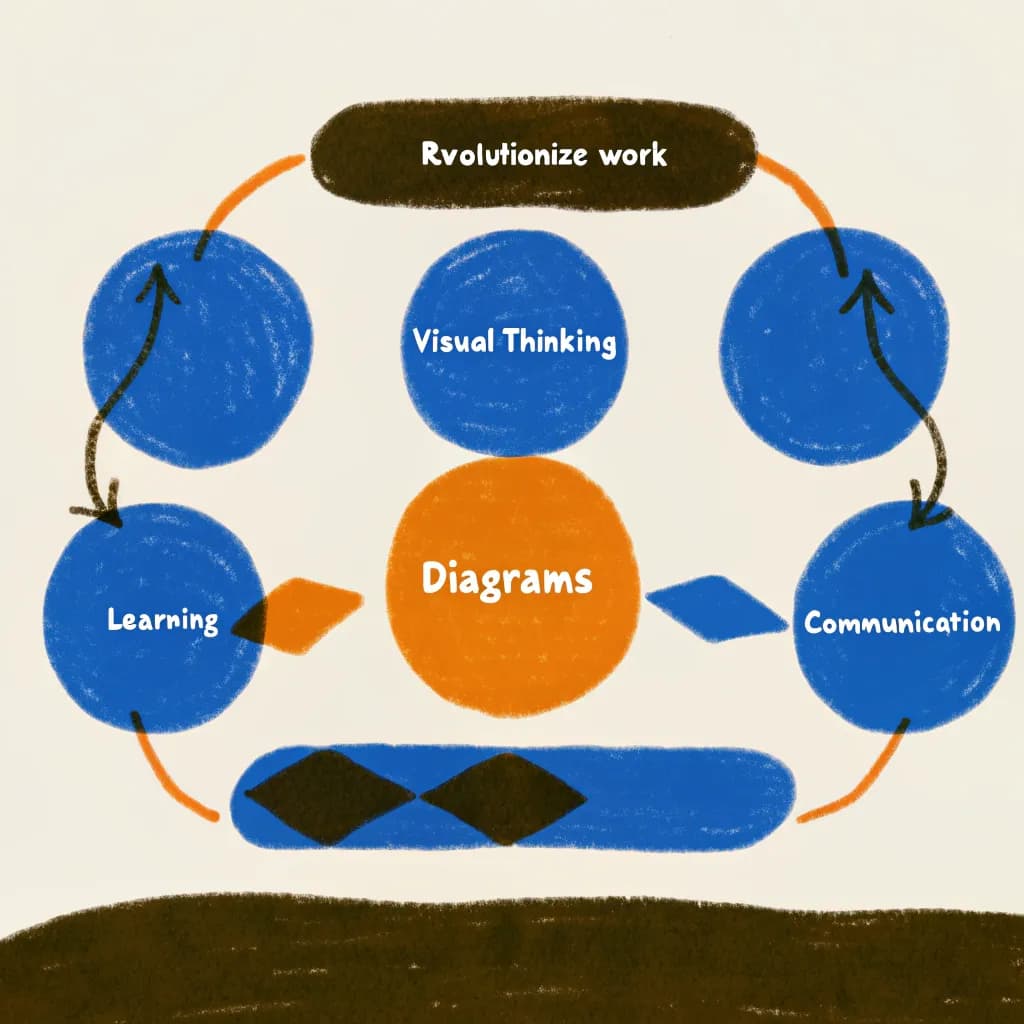
Why Visual Thinking Matters More Than Ever in 2025
Ever felt overwhelmed by information? You're not alone. We're living in an age where we process more data in a day than our grandparents did in a year. That's where visual thinking comes in-and trust me, it's not just for designers anymore.
What Is Visual Thinking, Really?
Think of visual thinking as organizing your thoughts using pictures, diagrams, and shapes instead of just words. It's like giving your brain a pair of glasses-suddenly, everything becomes clearer.
I remember when I first started using diagrams at work. I was drowning in project details, and my boss asked me to explain our workflow. Instead of a boring document, I sketched a simple flowchart. The difference? Everyone got it immediately.
Why Your Brain Loves Visuals
Here's a cool fact: your brain processes images 60,000 times faster than text. That's not a typo-sixty thousand times! When you see a diagram, your brain doesn't have to work as hard to understand it.
The Science Behind It
Our brains are wired for visual information. About 90% of the information transmitted to our brain is visual. That's why:
- You remember 80% of what you see vs. 20% of what you read
- Visual aids improve learning by up to 400%
- People following directions with illustrations do 323% better than those without
Real-World Benefits You'll Actually Notice
1. Faster Decision Making
When you map out your options visually, patterns emerge that you'd never spot in a list. I use decision trees for everything now-from choosing restaurants to planning career moves.
2. Better Memory
Remember cramming for exams? Now imagine if you'd used mind maps instead. Visual connections create stronger memory pathways. It's like building a mental GPS instead of memorizing street names.
3. Clearer Communication
Ever tried explaining a complex idea over email? It's painful. A simple diagram can replace paragraphs of text and actually get your point across.
Visual Thinking for Non-Technical People
You don't need to be a designer or engineer to think visually. Here's how everyday people use it:
Stay-at-home parents use visual calendars to manage family schedules and meal planning.
Small business owners map customer journeys to improve their service.
Students create mind maps for exam revision and essay planning.
Managers sketch org charts to understand team dynamics better.
Getting Started Is Easier Than You Think
The best part? You don't need fancy software or design skills. Start simple:
- Grab a whiteboard or paper - Sketch your next project as boxes and arrows
- Use sticky notes - Move ideas around physically before committing
- Try free tools - Modern diagram tools like AutoDiagram make it point-and-click easy
The AutoDiagram Advantage
Speaking of easy tools, this is where AI-powered diagramming changes the game. Instead of struggling with where to put each box or how to connect ideas, you simply describe what you want.
Type "show me how to launch a product" and boom-you get a professional diagram. No design degree required.
Common Myths About Visual Thinking
Myth #1: "I'm not creative enough" Visual thinking isn't about being artistic. It's about organizing information. Stick figures and boxes work just fine.
Myth #2: "It takes too much time" Actually, it saves time. Five minutes creating a diagram can save hours of confusion later.
Myth #3: "My work is too complex" Complex work needs visual thinking even more! Breaking down complexity is exactly what diagrams do best.
Where to Use Visual Thinking Daily
At Work
- Planning projects with timeline diagrams
- Explaining processes to new team members
- Brainstorming solutions to problems
- Presenting ideas to stakeholders
At Home
- Organizing home renovation plans
- Planning vacations with the family
- Managing household budgets
- Teaching kids new concepts
For Personal Growth
- Setting and tracking goals
- Learning new skills faster
- Making important life decisions
- Organizing thoughts and ideas
The Future Is Visual
As we move deeper into 2025, visual communication is becoming the norm, not the exception. Companies that embrace it are faster, clearer, and more innovative.
Think about social media-why did Instagram beat Twitter? Why do TikTok videos go viral? Because humans are visual creatures at our core.
Your Next Step
Here's my challenge to you: Next time you need to solve a problem or explain something, reach for a diagram before you reach for words.
Start simple. Maybe sketch out your week as a timeline. Or map your current project as a flowchart. You'll be amazed at what becomes clear when you can see it.
Practical Tips to Start Today
- Replace your next status email with a simple diagram
- Use a mind map for your next brainstorming session
- Create a visual checklist instead of a text list
- Map out your goals for the quarter visually
- Explain your next idea with a sketch before writing it up
The Bottom Line
Visual thinking isn't a trend-it's how our brains are designed to work. By embracing diagrams and visual tools, you're not learning something new. You're finally using your brain the way it was meant to be used.
In our information-overloaded world, clarity is the ultimate superpower. And visual thinking? That's your secret weapon.
Ready to see the difference? Your brain is already prepared. All you need to do is start drawing, mapping, and diagramming your way to clearer thinking.
Trust me, once you start thinking visually, you'll wonder how you ever managed without it.
Want to try visual thinking without the hassle of complex software? Check out AutoDiagram-where you can create professional diagrams just by describing what you need. No design skills required.