
The Meeting Revolution: How One Simple Diagram Makes Meetings Actually Productive

The Meeting Revolution: How One Simple Diagram Makes Meetings Actually Productive
We've all been there: Sitting in a meeting thinking "this could have been an email."
An hour gone. Nothing decided. Everyone leaves confused about next steps.
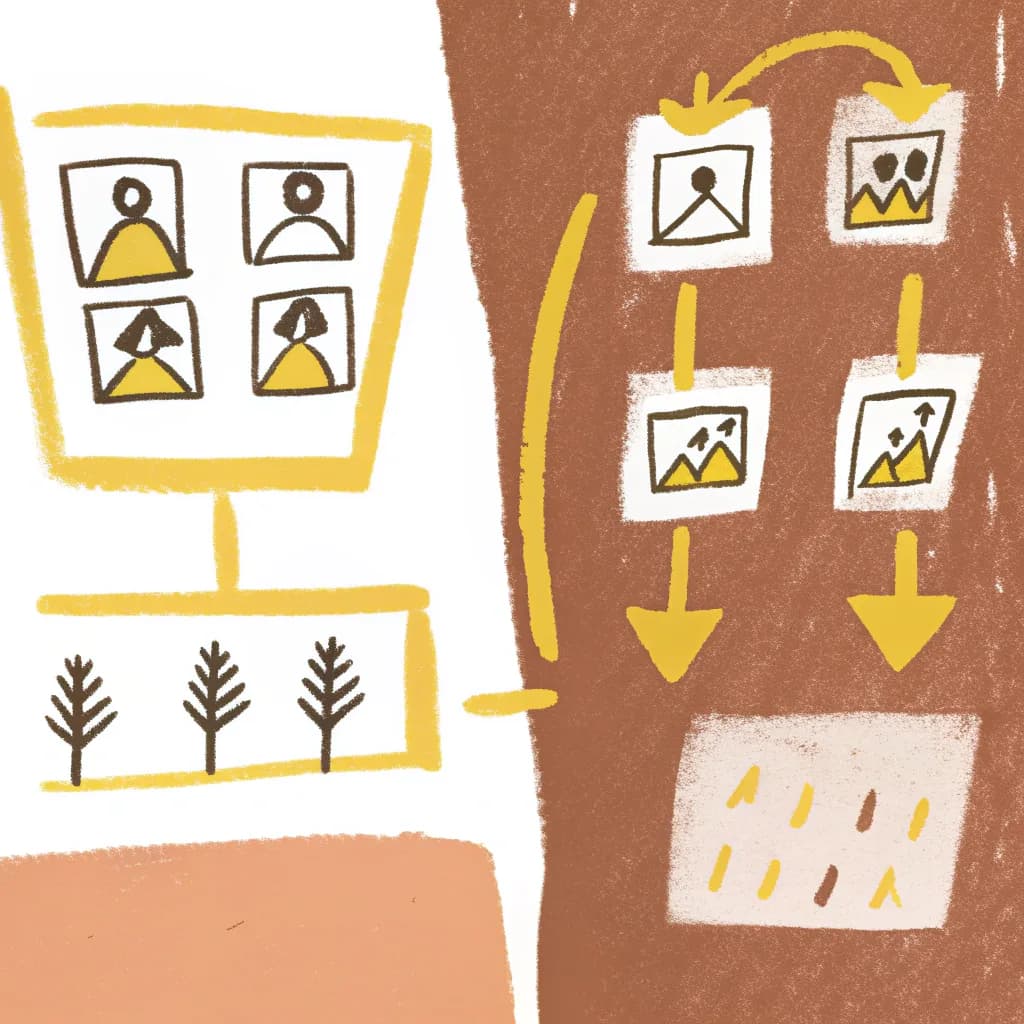
Meetings don't have to suck. The secret? Make them visual!
When you can SEE what you're discussing, meetings become:
- ✓ 50% shorter
- ✓ Actually productive
- ✓ Clear outcomes
- ✓ People leave knowing exactly what to do
Let me show you how!
Why Most Meetings Fail
Traditional meeting:
- Talking in circles
- Same points repeated
- Can't track what's been decided
- Side conversations derail
- Vague next steps
- People check their phones
The problem: Too much talking, not enough showing!
The Visual Meeting Framework
Before the meeting: Create visual agenda
During the meeting: Use visuals to focus discussion
After the meeting: Share visual summary
Result: Everyone stays on track, decisions are clear, action items are obvious!
Visual Tool #1: The Agenda Roadmap
Instead of bullet-point agenda:
MEETING: Q4 Planning
Time: 60 minutes

• Review Q3 (10 min)
• Discuss Q4 priorities (20 min)
• Budget allocation (15 min)
• Action items (10 min)
• Wrap-up (5 min)
Try this visual roadmap:
[START] → [Q3 Review: 10 min] → [Q4 Priorities: 20 min] → [Budget: 15 min] → [Actions: 10 min] → [END]
          "Where we've been"     "Where we're going"      "Resources"     "Who does what"
Why it works:
- Everyone sees the journey
- Easy to track progress
- Time boxes are clear
- Can't get derailed as easily
Pro tip: Display this on screen during the meeting. Update in real-time as you progress!
Visual Tool #2: The Decision Tree
Perfect for: Meetings where you need to make choices
Traditional meeting:
- Endless debate
- Going in circles
- No clear decision criteria
- Emotions override logic
Visual decision tree approach:
DECISION: Should we launch new product line?

Criteria to consider:
├─ Market demand?
│  └─ Yes → Check profitability
│  └─ No → STOP, don't launch
├─ Can we be profitable within 12 months?
│  └─ Yes → Check resources
│  └─ No → STOP, reconsider timeline
├─ Do we have resources (staff, capital)?
│  └─ Yes → Check strategic fit
│  └─ No → STOP, or hire first
└─ Does it align with 5-year strategy?
   └─ Yes → LAUNCH
   └─ No → STOP, reconsider strategy
Create this BEFORE the meeting!
In the meeting: Walk through each decision point with the team
Result: Decisions based on criteria, not loudest voice!
Visual Tool #3: The "Parking Lot"
Problem: Great meetings get derailed by off-topic discussions
Solution: Visual "parking lot"
How it works:
Have a visible space (whiteboard section, digital slide, sticky note area) labeled "PARKING LOT"
When someone brings up something off-topic:
- Acknowledge it's important
- Add it to the parking lot visually
- Promise to address later (or in a different meeting)
- Return to agenda
Example parking lot during product meeting:
- 📝 Website redesign ideas
- 📝 Hiring more support staff
- 📝 Office space relocation
- 📝 Team building event
End of meeting: Review parking lot, schedule follow-ups if needed
Why it works: People feel heard, but meeting stays on track!
Visual Tool #4: The Mind Map Meeting
Best for: Brainstorming, strategy sessions, problem-solving
Instead of: Taking linear notes that nobody reads
Try: Collaborative mind map
Setup:
- Large whiteboard or digital board
- Meeting topic in center
- Branches for main themes
- Everyone contributes in real-time
Example: Marketing Campaign Brainstorm
                  [Campaign: Summer Sale]
                    /      |      \
            Channels   Message   Timeline
              /  \       |        /  \
        Social Email  Discounts  June July
         / \           / | \
    Insta FB    20% 30% BOGO
By end of meeting: Entire campaign mapped visually!
Action items: Assign each branch to an owner
Visual Tool #5: The Kanban Meeting Board
Perfect for: Status updates, team standups, project reviews
Setup: Three columns
| TO DO | IN PROGRESS | DONE |
Meeting format:
- Review DONE (celebrate wins!)
- Discuss IN PROGRESS (any blockers?)
- Prioritize TO DO (what's next?)
Visual at a glance: Team sees entire workload and progress
No more: Long verbal updates nobody remembers
Real Story: The 3-Hour Meeting That Became 45 Minutes
A marketing team had weekly planning meetings that dragged on FOREVER.
Old format:
- 3 hours
- People talked over each other
- Repeated discussions
- Left with vague action items
New visual format:
- Visual agenda timeline (45 min total)
- Kanban board showing all projects
- Decision tree for prioritization
- Visual action items assigned in real-time
Results:
- 45 minutes (saved 2+ hours!)
- Clear decisions
- Everyone left knowing exactly what to do
- Team actually LIKED meetings!
The "One-Slide Rule" for Presentations in Meetings
Instead of: 30-slide deck nobody pays attention to
Try: One key slide that tells the story
Example: Monthly Results Presentation
Old way: 15 slides of charts, tables, bullet points
New way: One dashboard visual showing:
- Revenue trend (graph)
- Top wins (highlighted)
- Key challenges (red flags)
- Focus for next month (arrows pointing forward)
Then: Talk through the visual, answer questions
Result: 5 minutes instead of 30, better understanding!
Visual Icebreakers (Yes, Really!)
For team meetings or workshops:
Activity: "Draw Your Week"
Everyone draws a simple visual representing their week:
- Size of shapes = time spent
- Colors = different projects
- Weather symbols = how they felt
Share in 1 minute each
Why it works:
- Quick check-in
- Visual variety is engaging
- Learn about team workload
- Builds empathy
The Post-Meeting Visual Summary
After the meeting:
Don't send: 3-page meeting notes nobody reads
Instead send: One visual showing:
- What was decided (✓ checkmarks)
- Action items with owners (→ Name)
- Deadlines (📅 dates)
- Next meeting topic
Example format:
MEETING: Q4 Planning [Oct 15]

DECISIONS MADE:
✓ Launch product Dec 1
✓ Budget approved: $50K
✓ Hire 2 contractors

ACTION ITEMS:
→ Sarah: Finalize product specs (Oct 22)
→ John: Source contractors (Oct 20)
→ Maria: Create launch timeline (Oct 25)

NEXT MEETING:
Nov 1: Review launch readiness
Result: 100% clarity, actual accountability!
Virtual Meeting Visuals
Remote meetings need visuals even MORE!
Tools that help:
- Miro/Mural (collaborative whiteboarding)
- Google Jamboard (simple, free)
- AutoDiagram (create visuals to share)
- Even just screen-share a simple slide!
Best practices:
- Share visual agenda at start
- Use screen annotation tools
- Collaborative documents everyone can edit
- Visual reactions (emoji, thumbs up) for quick polls
The "Visual Voting" Method
For decisions in meetings:
Instead of: Endless debate with no resolution
Try: Visual voting
Example: Choose Next Project
List options on board. Everyone gets 3 dot stickers (or digital equivalent).
Place dots next to preferred options.
Result: Visual consensus in 2 minutes!
Variations:
- Color-coded dots (red = concerns, green = excited)
- Different dot sizes (big = high priority, small = nice to have)
- Multiple rounds of voting to narrow options
Meeting Types That NEED Visuals
Strategy Meetings
- SWOT analysis diagrams
- Strategy maps
- Roadmaps
Brainstorming Sessions
- Mind maps
- Affinity diagrams
- Idea boards
Problem-Solving Meetings
- Fishbone diagrams (cause and effect)
- Process flows
- Decision trees
Status Updates
- Kanban boards
- Dashboards
- Gantt charts
Retrospectives
- Timeline of events
- What went well / what didn't (visual columns)
- Action items board
The "No Visual, No Meeting" Rule
Radical idea: Require visual prep for meetings
Before scheduling a meeting:
- Create visual agenda
- Prepare any visuals needed for discussion
- Share with attendees in advance
Result:
- Better prepared participants
- Faster decisions
- Shorter meetings
- Some meetings become unnecessary (visual shared async instead!)
Common Meeting Mistakes (And Visual Fixes)
Mistake #1: No Clear Outcome
Fix: Start with visual showing desired end state
Mistake #2: Too Many Topics
Fix: Visual agenda showing time boxes-forces prioritization
Mistake #3: Dominant Voices Take Over
Fix: Visual voting and sticky notes give everyone equal voice
Mistake #4: Forgetting What Was Decided
Fix: Visual summary immediately after meeting
Mistake #5: No Follow-Through
Fix: Visual action tracker shared and updated weekly
The "Meeting Dashboard" Concept
For recurring meetings (like weekly team meetings):
Create a template visual dashboard:
- Section 1: Last week's wins
- Section 2: This week's priorities
- Section 3: Blockers/challenges
- Section 4: Metrics/KPIs
- Section 5: Action items
Update before each meeting
Meeting becomes: Walk through the dashboard, discuss, decide
Super efficient!
Your Meeting Improvement Challenge
Next meeting you run:
- Create a visual agenda (can be simple!)
- Use ONE visual tool during the meeting (mind map, decision tree, Kanban-pick one!)
- Send visual summary after the meeting
I guarantee: That meeting will be more productive than your usual meetings!
Do this consistently = reputation as someone who runs GREAT meetings!
Ready to revolutionize your meetings? Use AutoDiagram to create meeting agendas, decision trees, and visual summaries that make every meeting count → Make Meetings Better
Quick FAQ
Q: What if I'm not running the meeting?
A: Offer to take "visual notes" on a whiteboard. Most meeting leaders will appreciate it!
Q: We don't have a whiteboard. Can this still work?
A: Yes! Digital tools, shared Google slides, even sketching on paper and holding it up works!
Q: What about meetings that are just updates?
A: Those might not need to BE meetings! Share a visual update async instead.